




[Verification] The difference in taste depending on the grind is actually verified through extraction!
hello everyone.
This is Usukura from CROWD ROASTER .
Up until now, I've shared various extraction recipes and techniques for making adjustments as needed.
However, you may have wondered whether grinding the beans more finely really makes the flavor stronger, or whether raising the water temperature makes it easier to extract the flavor.
This project aims to resolve questions by actually extracting and comparing data.
For our memorable first episode, we'll explore the differences caused by the grind size.
This is Usukura from CROWD ROASTER .
Up until now, I've shared various extraction recipes and techniques for making adjustments as needed.
However, you may have wondered whether grinding the beans more finely really makes the flavor stronger, or whether raising the water temperature makes it easier to extract the flavor.
This project aims to resolve questions by actually extracting and comparing data.
For our memorable first episode, we'll explore the differences caused by the grind size.
Finer details result in a more solid finish, while coarser details result in a cleaner look.
The depth of flavor is a very important factor in the taste of coffee.
It's often said that you can control the amount of flavor by adjusting the grind size.
While it's difficult to generalize due to various factors such as roasting level, it's generally said that finer ground beans have a richer flavor, while coarser ground beans have a cleaner taste.
A finer grind results in smaller gaps between the coffee grounds, slowing down the extraction process and allowing for a more thorough extraction, which tends to produce a firmer, more robust coffee.
On the other hand, a coarser grind creates wider gaps between the coffee grounds, resulting in a faster extraction speed and a smoother brew, which tends to produce a cleaner, more refreshing taste.
It's often said that you can control the amount of flavor by adjusting the grind size.
While it's difficult to generalize due to various factors such as roasting level, it's generally said that finer ground beans have a richer flavor, while coarser ground beans have a cleaner taste.
A finer grind results in smaller gaps between the coffee grounds, slowing down the extraction process and allowing for a more thorough extraction, which tends to produce a firmer, more robust coffee.
On the other hand, a coarser grind creates wider gaps between the coffee grounds, resulting in a faster extraction speed and a smoother brew, which tends to produce a cleaner, more refreshing taste.
Of course, the finer the powder, the faster the ingredients will be released.
I actually tried extracting it.
Now let's actually try extracting the data.
This time, we will try to keep the environment as similar as possible to minimize variations during extraction.
For coffee brewing, we use "[KKW] Kenya/Tim Factory/ SL28 /Washed," which is easy to brew consistently.
The roast level is light.
This time, we will try to keep the environment as similar as possible to minimize variations during extraction.
For coffee brewing, we use "[KKW] Kenya/Tim Factory/ SL28 /Washed," which is easy to brew consistently.
The roast level is light.
−−−
[Recipe]
Method: Hand drip Coffee beans: 30g
Extraction amount: 420ml
Pouring amount: 500ml
Steeping time: 50 seconds Water temperature: 91 degrees
[Recipe]
Method: Hand drip Coffee beans: 30g
Extraction amount: 420ml
Pouring amount: 500ml
Steeping time: 50 seconds Water temperature: 91 degrees
−−−
This time, to make it easier to understand, I'll try brewing it with an extremely different grind size.
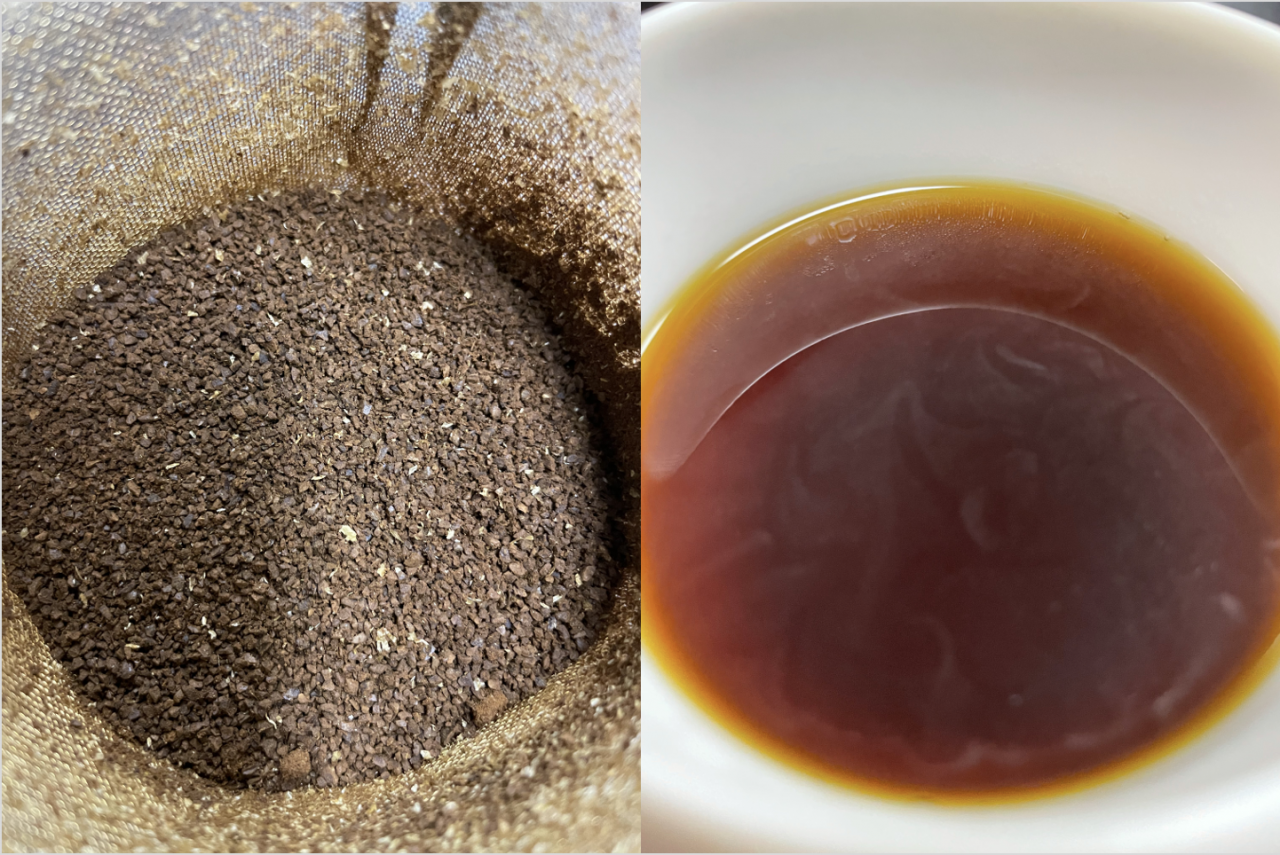
[Finely ground]
[Coarsely ground]
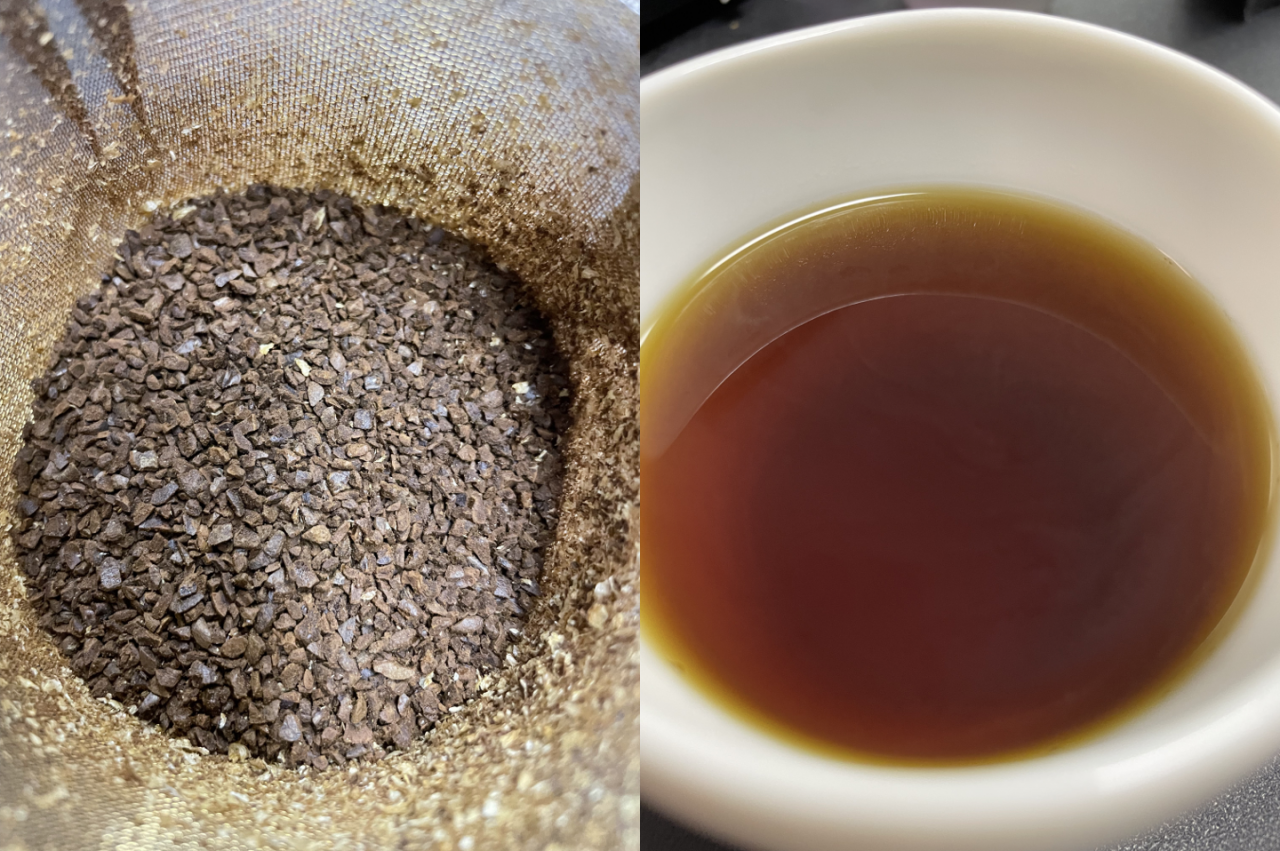
The difference was evident in the color of the liquid.
When comparing them, the finer-ground coffee produced a darker liquid, while the coarser-ground coffee produced a lighter liquid.
Also, I get the impression that the oily texture is more pronounced in coffees with a finer grind.
There were also differences in extraction time.
The finely ground coffee was extracted in a total of 1 minute and 50 seconds, while the coarsely ground coffee was extracted in 1 minute and 20 seconds.
The gap has widened to 30 seconds.
My impression after tasting it was that the finely ground beans had a rich body and depth of flavor, and the texture was smooth, perhaps due to the oils released. However, because the acidity was rather muted, the sourness became more prominent as it cooled.
The coarsely ground coffee has a lighter consistency and a clean, refreshing taste, making it easy to drink a glass. However, the overall flavor was somewhat lacking.
The results of this study confirmed the common belief that "finer particles result in a darker color, and coarser particles result in a lighter color."
This time, to make it easier to understand, I'll try brewing it with an extremely different grind size.
[Finely ground]
[Coarsely ground]
The difference was evident in the color of the liquid.
When comparing them, the finer-ground coffee produced a darker liquid, while the coarser-ground coffee produced a lighter liquid.
Also, I get the impression that the oily texture is more pronounced in coffees with a finer grind.
There were also differences in extraction time.
The finely ground coffee was extracted in a total of 1 minute and 50 seconds, while the coarsely ground coffee was extracted in 1 minute and 20 seconds.
The gap has widened to 30 seconds.
My impression after tasting it was that the finely ground beans had a rich body and depth of flavor, and the texture was smooth, perhaps due to the oils released. However, because the acidity was rather muted, the sourness became more prominent as it cooled.
The coarsely ground coffee has a lighter consistency and a clean, refreshing taste, making it easy to drink a glass. However, the overall flavor was somewhat lacking.
The results of this study confirmed the common belief that "finer particles result in a darker color, and coarser particles result in a lighter color."
What grind size do you recommend?
Based on these results, I will now tell you my recommended grind size.
Both fine and coarse grinds had their advantages, but they also had their drawbacks.
The ideal flavor is one that combines the best of both worlds.
This time, I recommend "medium-coarse grind."
Instead of using a medium grind, we recommend a grind that's slightly coarser than that.
Both fine and coarse grinds had their advantages, but they also had their drawbacks.
The ideal flavor is one that combines the best of both worlds.
This time, I recommend "medium-coarse grind."
Instead of using a medium grind, we recommend a grind that's slightly coarser than that.
This grind size prioritizes "clean cup," one of the key factors in evaluating specialty coffee.
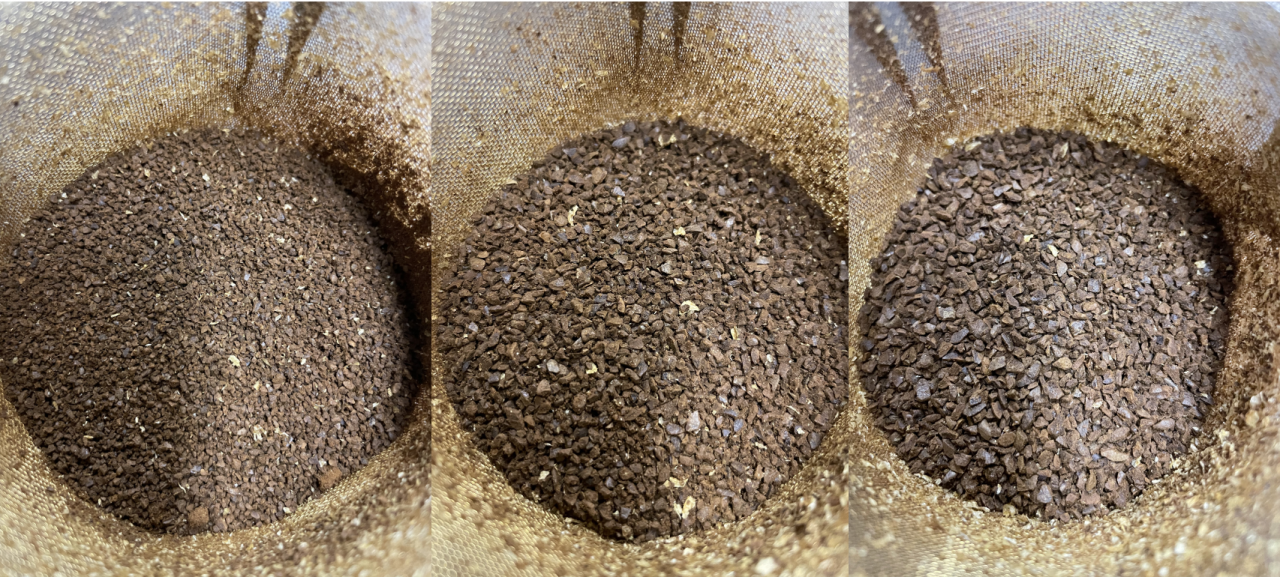
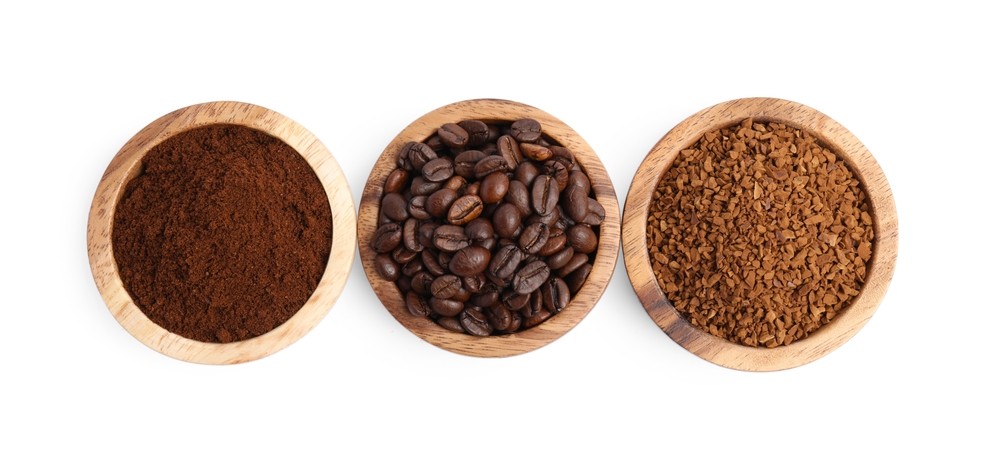
From left to right: finely ground, medium-coarse ground, coarse ground.
Because it's not too coarse, it retains a certain richness and body while also creating a clean drinking experience. Furthermore, it tends to produce a clean cup without off-flavors, making it easier to perceive the flavors, and resulting in a grind with an excellent balance of sweetness and acidity.
Because it's not too coarse, it retains a certain richness and body while also creating a clean drinking experience. Furthermore, it tends to produce a clean cup without off-flavors, making it easier to perceive the flavors, and resulting in a grind with an excellent balance of sweetness and acidity.
Since it retains a slight oily feel, you can also experience the smooth texture when the beans are ground finely.
When I extracted using the same recipe, the extraction time was exactly in between, at "1 minute and 35 seconds".
The liquid color is somewhere in the middle, and it has a slightly oily feel.
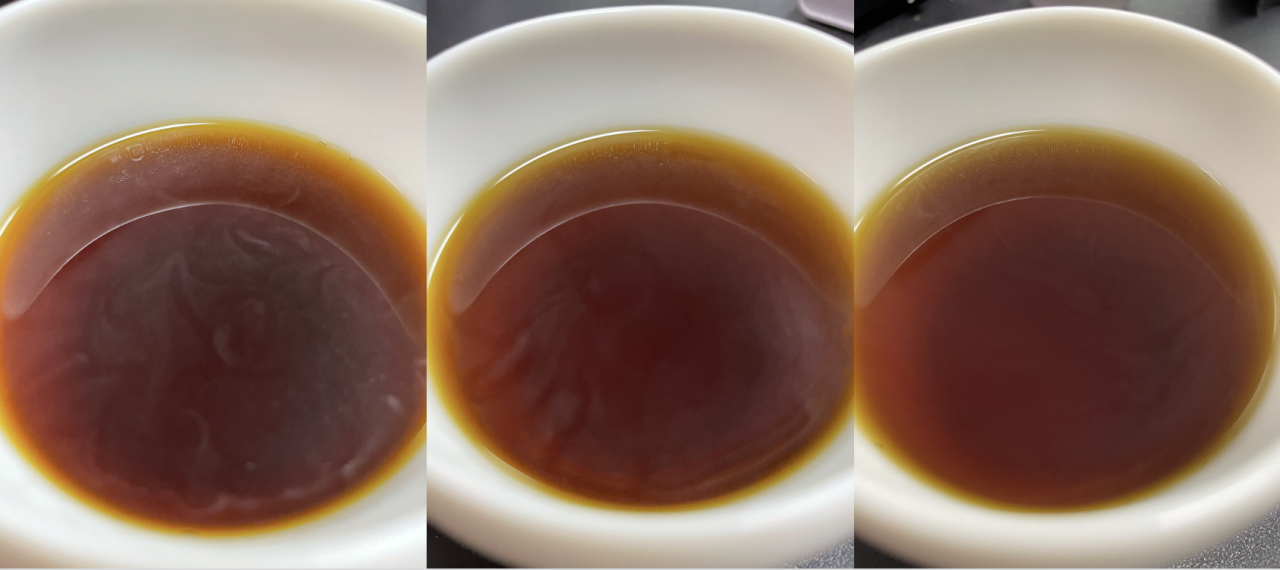
From left to right: finely ground, medium-coarse ground, coarse ground.
First of all, we recommend brewing each coffee using the grind size we've introduced.
This grind size offers the best balance, making extraction easier.
For those who want to extract coffee more authentically, it's ideal to be mindful of the unique flavors of each brand and finely control the grind size according to the taste you want to achieve.
For CROWD ROASTER brands like "[KKW] Kenya/Tim Factory/ SL28 /Washed" and "[ SL28 ] Kenya/Kiamabara/ SL28 /Washed," where you want to bring out the full flavor, it's recommended to grind the beans finer.
For those who want to extract coffee more authentically, it's ideal to be mindful of the unique flavors of each brand and finely control the grind size according to the taste you want to achieve.
For CROWD ROASTER brands like "[KKW] Kenya/Tim Factory/ SL28 /Washed" and "[ SL28 ] Kenya/Kiamabara/ SL28 /Washed," where you want to bring out the full flavor, it's recommended to grind the beans finer.
On the other hand, for brands that you want to express a tea-like impression, such as "[CSLC] Colombia/El Paraiso Farm/Castillo/Double Anaerobic Lychee" or "[SDE] Ethiopia/Sidamo/Ethiopian Heirloom Variety/Washed," we recommend grinding them coarsely.
The KKW used in this video is also available for purchase through CROWD ROASTER app, so if you're interested, be sure to check it out!
>> Check stocks in the app

Even with the same brand of coffee, changing the grind size will alter the flavor.
I think it's also fun to savor the changes in flavor depending on the grind size!
We encourage you to try out different grind settings and discover your preferred grind size.
2024.2.28
Hiroto Usukura
If you want to enjoy coffee more deeply
" CROWD ROASTER APP"
Manabu at CROWD ROASTER LOUNGE
・Push notifications for article updates・Full of original articles exclusive to CROWD ROASTER
・Direct links to detailed information about green beans and roasters
App-only features
- Choose green beans and roasters to create and participate in roasting events・CROWD ROASTER SHOP: Everything from beans to equipment is readily available
・GPS-linked coffee map function
Download the official app here