




Ethiopia Alicha Washed: A clean and pure taste.
This series introduces the coffee brands available through CROWD ROASTER app.
This time, we'll be introducing washed Yirgacheffe coffee from Ethiopia, a renowned coffee-producing region!
Its name is " Ethiopia/Alicha/Ethiopian native variety/washed ."
Let's take a look at the characteristics of this stock.
A bright and refreshing flavor reminiscent of lime and yellow peach.
Ethiopian Alicha G1 is characterized by refreshing citrus flavors reminiscent of lime and blood orange, and a gentle sweetness that evokes yellow peaches. It is a well-balanced coffee with a medium body and a satisfying mouthfeel, yet with a lingering, refreshing aftertaste.
The clean flavor, refined through the washed process, makes this a cup that fully showcases the charm of Yirgacheffe coffee.
Yirgacheffe, the holy land of specialty coffee
Yirgacheffe, where the Alicha Washing Station is located, is a coffee-producing region in southern Ethiopia. Situated at an altitude of 1,800m to 2,200m, the region boasts abundant rainfall and significant diurnal temperature variations, creating an ideal environment for coffee cultivation.
Yirgacheffe coffee is known for its floral aroma, bright acidity, and clean taste, and is highly regarded by coffee lovers around the world. As a region within Ethiopia where the washed process tradition is particularly deeply rooted, it has become synonymous with specialty coffee.
Yirgacheffe coffee is known for its floral aroma, bright acidity, and clean taste, and is highly regarded by coffee lovers around the world. As a region within Ethiopia where the washed process tradition is particularly deeply rooted, it has become synonymous with specialty coffee.
Coffee supported by 650 small-scale producers
This Alicha G1 is made from coffee cherries grown by approximately 650 producers who cultivate coffee around the Alicha washing station.
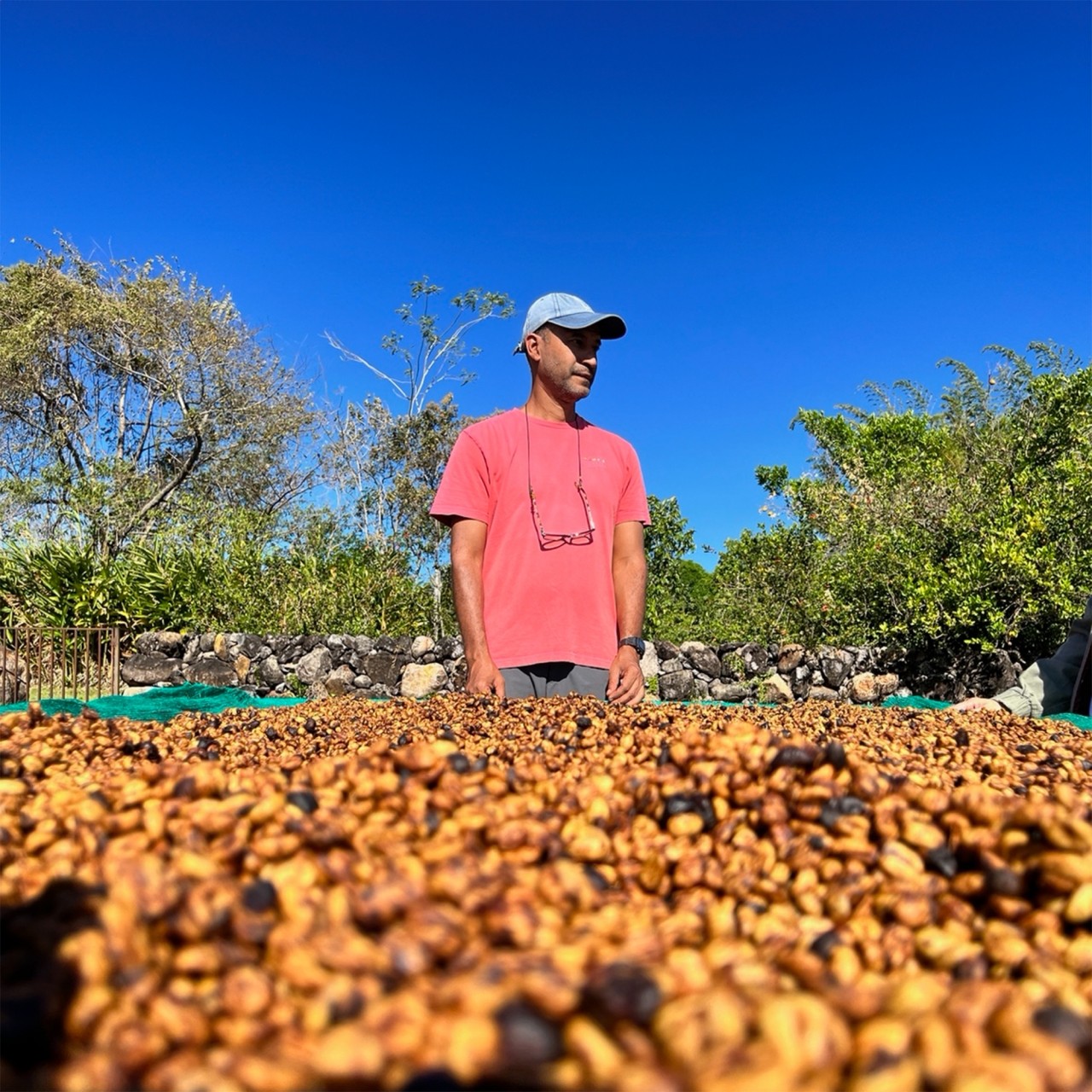
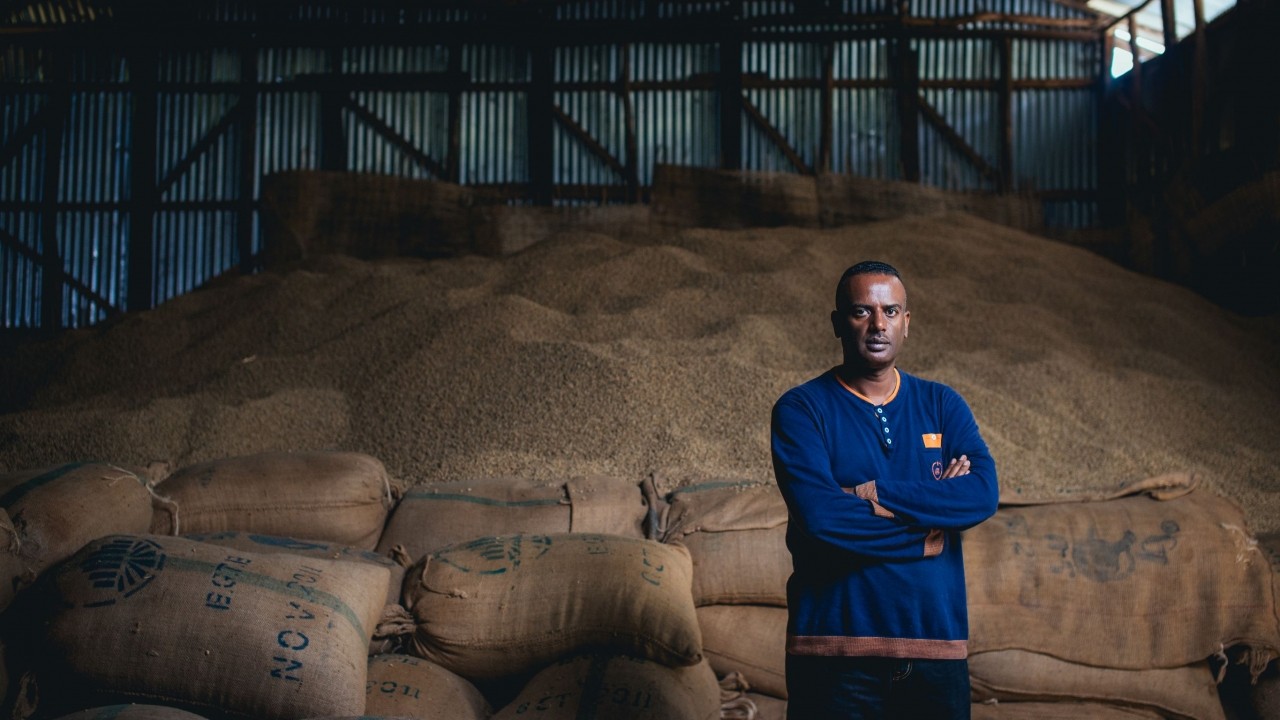 Abby, owner of Alice Washing Station
 Coffee cultivation in Ethiopia is mainly carried out by small-scale farmers who own less than one hectare of land. While they cultivate coffee as a cash crop, they also grow subsistence crops such as potatoes, mangoes, and avocados to support their basic livelihoods.
These small-scale farmers cannot afford to have their own processing facilities. This is where "washing stations" play a crucial role. Local producers bring their harvested coffee cherries together, and they are processed all at once. Quality control at the washing station greatly influences the final quality of the coffee.
These small-scale farmers cannot afford to have their own processing facilities. This is where "washing stations" play a crucial role. Local producers bring their harvested coffee cherries together, and they are processed all at once. Quality control at the washing station greatly influences the final quality of the coffee.
Achieving G1 grade through thorough quality control.
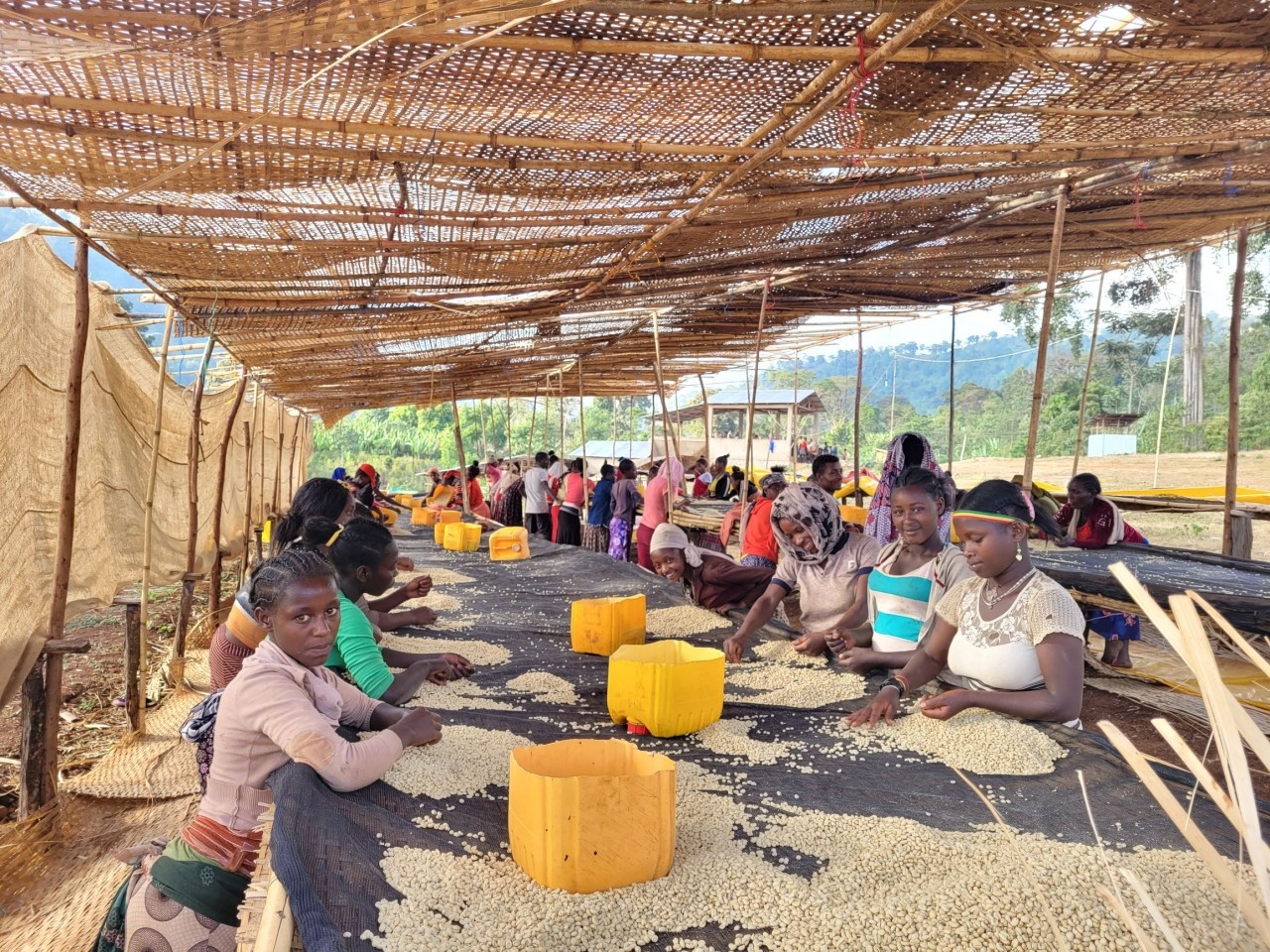
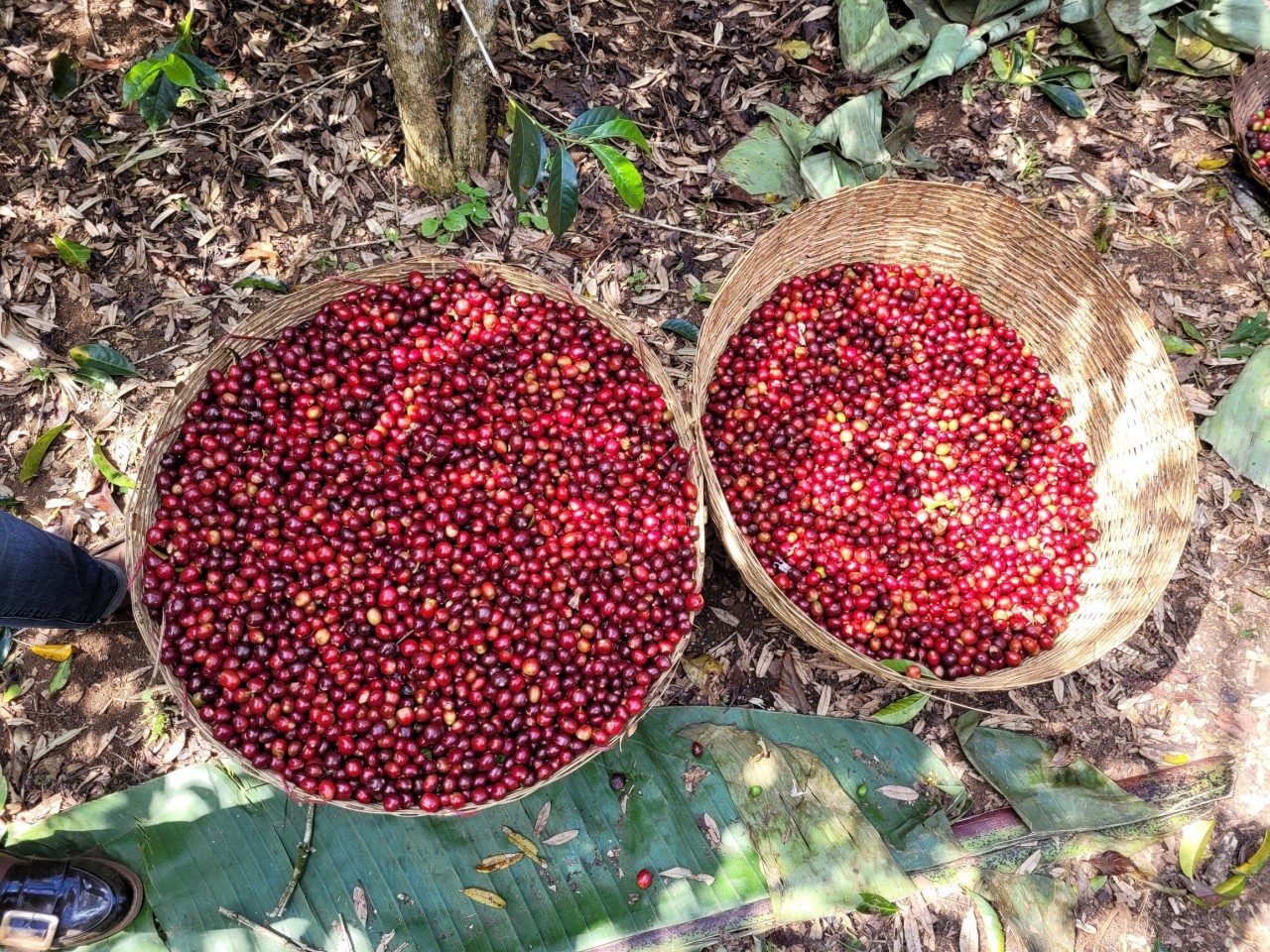
At the Alicha Washing Station, thorough quality control is implemented for all coffee cherries brought in. First, immature and light beans are removed using floater sorting, and then they are carefully sun-dried on African beds.
In the final finishing stage, the sorting process is repeated many times by hand to achieve a G1 grade.
In Ethiopia, coffee beans are graded according to the number of defects, with G1 being the highest quality grade. Only coffee that meets the strict standard of 0 to 3 defects per 300g is certified as G1. Achieving this grade requires meticulous work at each stage of processing and the final hand sorting by hand.
In the final finishing stage, the sorting process is repeated many times by hand to achieve a G1 grade.
In Ethiopia, coffee beans are graded according to the number of defects, with G1 being the highest quality grade. Only coffee that meets the strict standard of 0 to 3 defects per 300g is certified as G1. Achieving this grade requires meticulous work at each stage of processing and the final hand sorting by hand.
Cultivation methods that work in harmony with nature
Because the income of Alicha producers is limited, they cannot afford to purchase chemical Manabu fertilizers, insecticides, or herbicides. As a result, they practice a more natural farming method that does not use these products.
The combination of these traditional cultivation methods and thorough quality control at the washing station results in the clean, transparent flavor that is characteristic of Yirgacheffe.
The combination of these traditional cultivation methods and thorough quality control at the washing station results in the clean, transparent flavor that is characteristic of Yirgacheffe.
The complex flavors created by Ethiopian native varieties.
The coffee used in this product is an Ethiopian heirloom variety. Ethiopia is the origin of coffee, and countless varieties exist there, including wild species. The coffee grown in Alicha is also an heirloom variety that has been rooted in the land for a long time, and the complex blending of these varieties creates the multi-layered flavor unique to Yirgacheffe.
With its bright citrus acidity, peach-like sweetness, and clean finish, Alicha is a cup that allows you to fully appreciate the charm of Ethiopian coffee.
With its bright citrus acidity, peach-like sweetness, and clean finish, Alicha is a cup that allows you to fully appreciate the charm of Ethiopian coffee.
If you want to enjoy coffee more deeply
" CROWD ROASTER APP"
Manabu at CROWD ROASTER LOUNGE
・Push notifications for article updates・Full of original articles exclusive to CROWD ROASTER
・Direct links to detailed information about green beans and roasters
App-only features
- Choose green beans and roasters to create and participate in roasting events・CROWD ROASTER SHOP: Everything from beans to equipment is readily available
・GPS-linked coffee map function
Download the official app here